How to Plan a Corporate Retreat in the Canadian Rockies
- The Canmore Opera House
- 7 days ago
- 11 min read
A corporate retreat in the Canadian Rockies is one of the easiest sells you will ever make internally and one of the easiest things to get quietly wrong. The scenery does a lot of the work. The logistics do not. This is the guide we wish every organiser had before they started calling venues written by people who host retreats in Canmore every season and have watched what separates the ones that land from the ones that merely happen.
Work through it in order. Most of it applies anywhere in the Rockies; where Canmore, Banff and Kananaskis differ in ways that cost you money, we say so.
Why the Canadian Rockies work for a corporate retreat
There is a practical case underneath the postcard. The Bow Valley sits about an hour and a quarter from Calgary International Airport, which means a team can fly in from anywhere in North America and be in the mountains the same afternoon. It is a genuine four-season destination, so a February retreat is as viable as a September one. And it is compact, venues, hotels, restaurants and world-class activities all sit within a few minutes of each other, which keeps a two-day agenda from dissolving into transit.
The softer case matters too. Companies that invest in getting teams together report meaningfully better retention, and a third of employees say their best ideas come to them while travelling for work. You are not buying a room. You are buying the conditions in which people talk to each other differently.
Step 1: Decide what the retreat is actually for
Every other decision follows from this one, and it is the step most often skipped. Write down a single sentence that finishes: “This retreat will have worked if…”
There are really only four common answers, and they want different retreats:
Strategy and planning. Long working sessions, a room you can cover in paper, few distractions. The venue matters more than the activities.
Team connection. Shared experiences, unstructured time, meals together. The activities matter more than the venue.
Onboarding or training. Classroom layout, reliable AV, breakout space, a full day of structure.
Reward and celebration. A great dinner, a memorable activity, and light-touch content.
A retreat that tries to be all four is the one people come home from tired and vague. Pick one, let the others be secondary, and say so in the invitation.
Step 2: Set a budget that reflects real numbers
Industry benchmarks put a typical corporate retreat somewhere between $2,000 and $4,000 per person all in, including flights and accommodation, with on-site costs alone running roughly $300 to $350 per person per day. If your number is well under that, you are probably planning a local retreat, which is a perfectly good idea and the reason a lot of Alberta companies come to Canmore rather than flying somewhere.
A useful split to start from:
Line item | Rough share of budget | Notes |
Accommodation | ~35% | The biggest lever. Condo-style units and shoulder season both cut it hard. |
Meals and catering | ~25% | Includes group dinners, which are where the memorable bits happen. |
Travel and transfers | 15–25% | Falls to almost nothing if your team is Alberta-based. |
Venue and activities | The remainder | The venue is usually the smallest line. See below. |
Contingency | 10–15% on top | Weather, headcount changes, one more taxi than you planned. |
The venue surprises people. A full-day rental of a private venue in Canmore starts around $950 at forty people, under $24 a head. Against a $300-plus per-person day, the room is not where your budget goes. Do not let a $200 difference in room rate push you into a space that is wrong for the work.
Step 3: Pick your base — Canmore, Banff or Kananaskis
All three are beautiful. They are not equivalent for a corporate group, and the difference is mostly administrative.
Canmore | Banff | Kananaskis | |
National park pass | Not required. Canmore is outside the park | Required for every vehicle, or a per-person commercial rate | Kananaskis Conservation Pass required per vehicle |
Drive from Calgary airport | Just over an hour | Roughly 20 minutes further | Around 45 minutes to an hour |
Park gate | None. You never reach it | Yes, and it queues in summer | None, but pass enforcement applies |
Accommodation value | Better value, more modern rooms | Higher prices, older properties | Resort pricing, limited choice |
Walkability | Downtown hotels, venues and restaurants close together | Very compact but very busy | Resort-contained; you drive to anything else |
Crowds and parking | Manageable | Heavy, especially summer | Light |
Evening options | Quieter, wraps up earlier | Bars open late | On-resort only |
The park pass is the line worth reading twice. Inside Banff National Park every vehicle needs a daily pass and commercial groups pay per person. For a forty-person retreat that is a real cost, a real queue, and a real chance that someone arrives without one and is late to your 9:00 AM opener. Canmore sits on provincial land outside the park, so none of that applies, and you are still twenty minutes from Banff if you want to spend an afternoon there.
If your retreat is mostly about the room and the conversation, base in Canmore. If it is mostly about the brand-name mountain experience and budget is not the constraint, Banff earns its premium. Kananaskis suits a retreat that wants total containment and no distractions.
Step 4: Choose the time of year
Corporate retreats cluster in September, October and May, and in the Rockies that instinct is right. Those are the months with the best combination of weather, availability and price.
Season | What it's like | Best for | Watch for |
Spring (April–May) | Quiet season, real value, low-elevation trails opening, changeable weather | Budget-conscious retreats, strategy sessions, first-time groups | “All four seasons in one day” plan an indoor backup |
Summer (June–mid Sept) | Long days, everything open, peak activity season | Big adventure agendas, family-inclusive retreats | Peak pricing and crowds; book six-plus months out |
Fall (Sept–Oct) | Crisp air, thinner crowds, larch season mid-September into early October | Almost everything, this is the sweet spot | Larch timing shifts year to year; don't promise dates |
Winter (Nov–early April) | Snow, short days, skiing, dog sledding, stargazing | Holiday parties, kickoffs, teams that want something different | Short daylight; build the agenda around a 4 p.m. sunset |
Two practical notes. Late spring and September into early October reliably give you the clearest air and the easiest bookings. And if a specific view matters, larch season, in particular can be treated as a bonus rather than the plan, because the window is short and moves with the weather.
Step 5: Book the venue first
Venue availability is the constraint that determines your dates, not the other way around. Book it before you send a save-the-date. Six to twelve months ahead is standard; three months is possible in shoulder season if you are flexible.
What to ask every venue, in the order that saves you the most time:
Capacity in the setup you actually want. “Capacity 120” usually means 120 in theatre rows. The same room may seat 64 to 80 at round tables and 20 in a U-shape. Ask for the number for your layout, in writing.
What the rental includes. Projector, screen, sound system, microphones, stage, Wi-Fi, tables, chairs. If AV is a separate invoice, get that number before you compare rates.
Whether the venue is exclusively yours. A conference next door changes the day. So does sharing a bar.
Catering rules. In-house-only with a food and beverage minimum is a very different budget from bring-your-own-caterer.
Access hours. What time can you get in to set up, and what time do you have to be out?
Parking. How many vehicles, where, and what it costs.
Breakout space. Somewhere for a side conversation or a small group — indoors or out.
Accessibility. Ask specifically rather than assuming, and ask before you poll your team.
Connectivity. If anyone is dialling in, confirm the Wi-Fi and what you need to bring.
A tip that saves an entire round of emails: ask for the price up front. Most mountain venues quote only on request, so the ones that publish a rate are usually the ones with nothing to hide about it.
Step 6: Sort accommodation and getting there
Most Rockies retreats fly into Calgary International Airport. From there it is about an hour and a quarter to Canmore, and roughly twenty minutes further to Banff. Shuttles and private transfers run the route year-round; for groups over about fifteen, a single chartered coach usually beats rental cars once you account for parking and the fact that somebody always gets lost.
For accommodation, the question that matters most is walkability. If your team can walk between their rooms, the meeting venue and dinner, you delete an entire category of logistics: no shuttle schedule, no transfer timings to get wrong, and nobody driving after a group dinner. In Canmore the Spring Creek and downtown area does this well with condo-style units that also let you put four colleagues in one unit, which cuts the biggest line in your budget and, in our experience, does more for team bonding than any structured exercise.
Book a room block early and ask about a corporate rate. Send the booking link with the save-the-date, not after it.
Step 7: Plan food properly
Food is roughly a quarter of your budget and close to all of the atmosphere. A few things we have learned watching retreats run:
Collect dietary requirements when you send the invitation, not the week before. Then send them to the caterer in writing and confirm they were received.
Feed people mid-afternoon. The 3 p.m. slump is real and it costs you the last session of the day.
Coffee is not a detail. Make sure it is available continuously, not just at scheduled breaks.
One dinner out beats three dinners in. A group dinner at a restaurant in town changes the register of the day. Book it well ahead, small mountain towns run out of tables for thirty long before they run out of tables for four.
Check whether the venue lets you bring your own caterer. If it does, you can use a local caterer at a local price rather than an in-house minimum.
Step 8: Build an agenda with actual white space in it
The most common mistake in retreat planning is over-programming. People need unstructured time to have the conversations the retreat is supposedly for. The pattern that works, across almost every source and our own observation, is: hard thinking in the morning, movement in the afternoon, food and talk in the evening.
A two-day Canmore retreat that we see work again and again:
Day one | Day two | |
Morning | Arrive, coffee, welcome and context-setting. One long, focused working session while everyone is fresh. | Breakfast together. The session that needs decisions made, you now have a day of shared context behind you. |
Midday | Lunch at the venue. Ten minutes outside before the room fills up again. | Lunch, then check-out logistics handled once so nobody worries about them. |
Afternoon | Get out. A guided activity, a hike, a cave, a river, something with a story attached. | A shorter activity or genuine free time. Resist filling this. |
Evening | Group dinner in town, then a firepit or a walk for whoever wants it. | Wrap-up, thank-yous, and depart or one more night for those who stay. |
If you have three days, put the adventure and wellness content in the middle and close with reflection. If you have one day, do one working session, one meal and one activity, and stop there.
Step 9: Choose activities that actually build a team
The Bow Valley is unusually good at this because the activities are genuinely distinctive, not corporate-branded exercises. Team-building activities in Canmore typically run somewhere between $25 and $100 per person, with guided adventure sitting at the top of that range.
What is on offer within minutes of Canmore, roughly by season:
Year-round: caving under Grotto Mountain with Canmore Cave Tours, brewery and distillery tours in town, biathlon at the Canmore Nordic Centre, indoor sessions and creative workshops.
Summer: whitewater rafting on the Kananaskis or the Bow, via ferrata climbing, guided hikes, championship golf at Silvertip and Stewart Creek, app-based outdoor scavenger games.
Winter: dog sledding, cross-country skiing and fat biking at the Nordic Centre, snowshoeing, and downhill nearby.
Two rules. First, always offer an alternative. The person with a bad knee or a fear of heights should not have to opt out publicly. Second, pick activities with a shared debrief built in: the value is in the conversation on the drive back, not the activity itself.
We have written a full guide to this: things to do in Canmore for groups and team building, with prices, durations, group sizes and seasons.
Step 10: Handle the logistics nobody thinks about
Park passes. If any part of your agenda happens inside Banff National Park or in Kananaskis Country, someone needs to buy passes and tell everyone. If you base in Canmore and stay in town, you need none.
A weather backup for every outdoor element. Mountain weather changes fast in every season. Have the indoor version written down before you need it.
Mobile coverage. It drops in the valleys and canyons. Tell people, and agree a meeting point rather than relying on texting.
Insurance and waivers. Adventure operators will need waivers signed; some venues require event insurance. Ask early as it is a slow thing to fix late.
Accessibility. Ask about mobility, dietary and sensory needs in the invitation, privately and as a normal question.
Altitude and hydration. Canmore sits well above most people's home elevation. Water at every session, and go gently on the first evening.
A named on-the-day owner. One person whose job is logistics, not content, so the facilitator can facilitate.
Step 11: Tell your team what to expect
Send a short pre-retreat note about a fortnight out: the agenda in outline, what to wear (layers, closed-toe shoes, a warm jacket even in July), what is optional, what is being paid for, dietary and accessibility questions, and the Wi-Fi situation. People relax when they know the shape of the thing, and a relaxed team is the whole point.
Say explicitly whether laptops are wanted. If the answer is no, say that too.
Step 12: Follow up, and find out whether it worked
Send a short anonymous survey within a week, while it is fresh, three questions is plenty. What was most valuable, what would you change, what should we actually do now. Then circulate the decisions and owners that came out of the retreat within the same week. Nothing kills the next retreat's attendance faster than the last one producing no visible consequence.
Revisit those commitments at ninety days. That is the real measure of whether the retreat did anything.
Corporate retreat FAQs
How far in advance should we book a corporate retreat in the Rockies?
Six to twelve months for peak season or a group over about fifty. In shoulder season (spring, or late autumn) three months is often enough if your dates are flexible. Venue availability is usually the binding constraint, so secure it first.
How long should a corporate retreat be?
One to three days is typical, and two days plus one night is the most common shape. Multi-day retreats average closer to four days, but those are usually company-wide gatherings rather than team offsites.
How much does a corporate retreat cost per person?
Roughly $2,000 to $4,000 per person all in for a travel retreat, or about $300 to $350 per person per day for on-site costs. A local retreat for an Alberta-based team costs a fraction of that, because travel and accommodation are the two biggest lines.
Do we need a national park pass for a corporate retreat in the Rockies?
It depends where you base. Canmore is outside Banff National Park, so no pass is required. Inside the park, every vehicle needs a daily pass and commercial groups pay a per-person rate. Kananaskis Country requires a separate Conservation Pass per vehicle, though it does not apply within the Canmore townsite.
What's the best month for a corporate retreat in the Canadian Rockies?
September and October are the strongest overall with thinner crowds, crisp weather, larch season, and good availability. May is the best value. Both are far easier to book than midsummer.
Can we run a hybrid retreat with people dialling in?
Yes, but confirm the specifics with your venue rather than assuming: Wi-Fi capacity, how audio gets into the call, and what equipment you need to bring. Mountain venues vary enormously here.
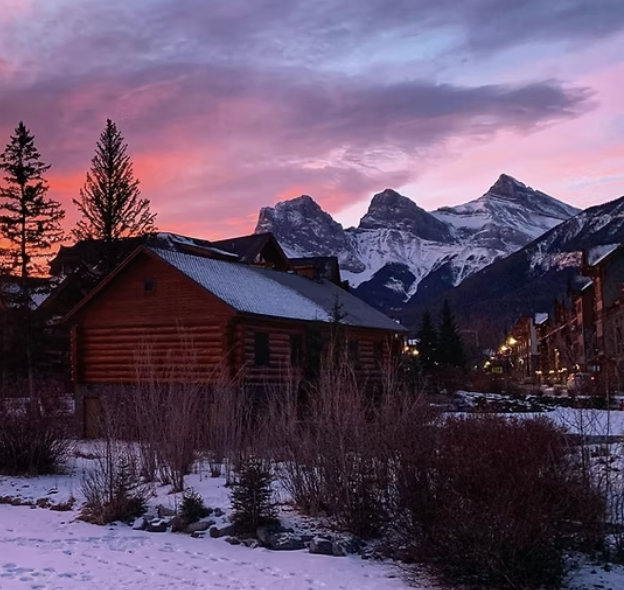
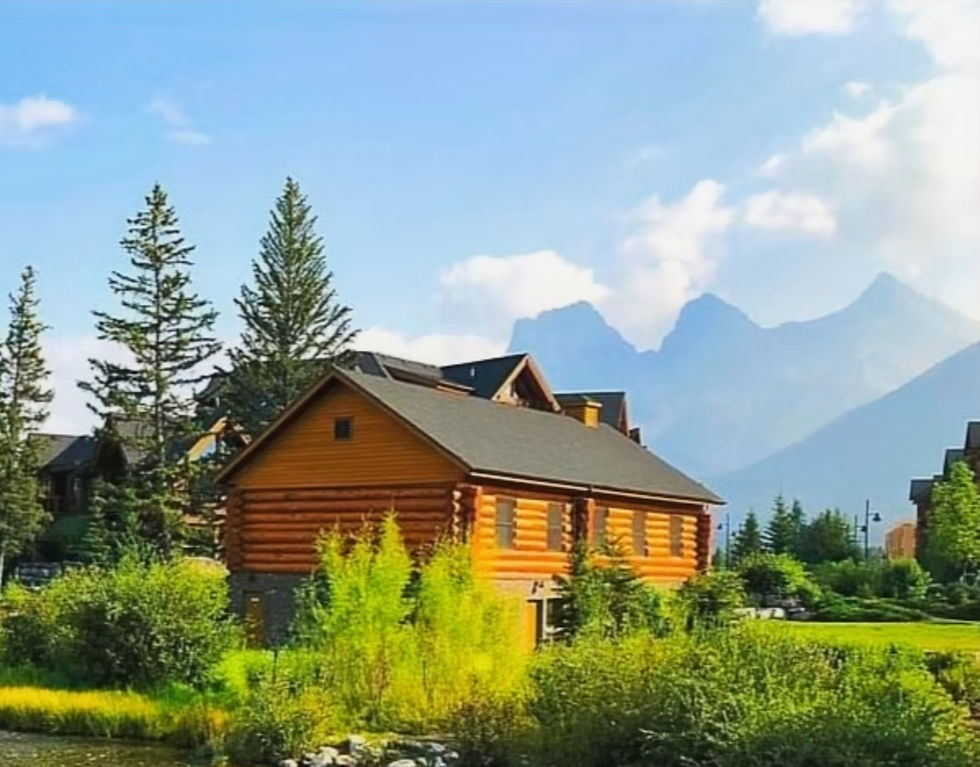
Planning a retreat in the Bow Valley? Spring Creek Opera House is a log-cabin corporate retreat venue in Canmore with mountain views, AV and a wet bar included, room for up to 120, and published pricing from $950 just steps from downtown hotels and restaurants, with no park pass required. Check your dates.
Comments